

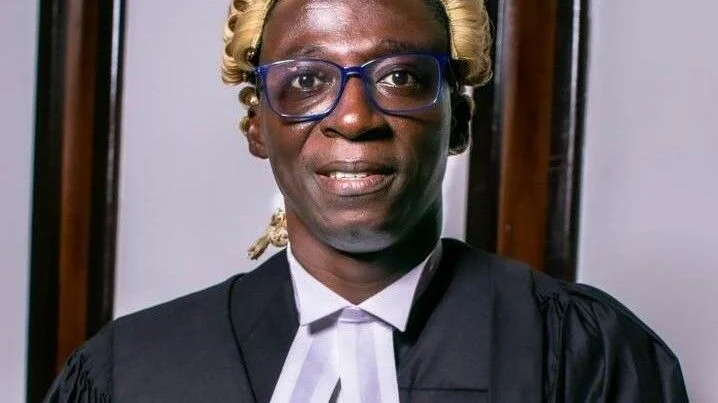
Legal practitioner Austin Kwabena Brako-Powers has stated that the recent High Court ruling against the Office of the Special Prosecutor (OSP) does not significantly weaken its prosecutorial mandate.
According to him, contrary to widespread public perception, the decision does not amount to a sweeping legal setback for the Special Prosecutor.
He explained on TV3’s Big Issues on Friday, April 17, 2026, that the High Court is a court of coordinate jurisdiction, meaning its decisions are not binding on other High Courts of equal standing.
As such, he noted that the ruling only has binding effect on lower courts and does not compel other High Courts to follow the same reasoning.
Mr Brako-Powers emphasized that if the decision had emanated from the Court of Appeal or the Supreme Court, it would have had binding authority on all lower courts.
He therefore advised the Special Prosecutor to proceed with prosecuting other cases before different High Courts across the country.
“I don’t think the decision has dealt a terrible blow to the Special Prosecutor. The office can still pursue its cases in other High Courts,” he stressed.
On the question of authorization, he expressed confidence that the Special Prosecutor operates with the necessary backing from the Attorney-General.
He pointed to the memorandum accompanying the Office of the Special Prosecutor Act, 2017, as indicative of such authorization.
However, he acknowledged longstanding concerns about the perceived independence of the OSP, particularly in light of Article 88(3) of the 1992 Constitution, which vests prosecutorial authority in the Attorney-General.
Mr Brako-Powers also criticized the legal representation of the OSP in the case, describing it as underwhelming and ineffective.
According to him, the inability of counsel to convincingly establish that the OSP had the required authorization was disappointing.
He further took issue with certain remarks made by the presiding judge, describing them as unnecessary and prejudicial.
In his view, the judge went beyond the facts of the case by making comments that could be interpreted as political.
He cited the judge’s characterization of the OSP as a product of “political re-engineering and gymnastics” as particularly troubling.
Such remarks, he argued, risk undermining public confidence in judicial neutrality and could open the door to perceptions of partisanship.
He concluded by urging judges to remain strictly within the confines of the facts and legal issues before them to preserve the integrity of the judiciary.

