

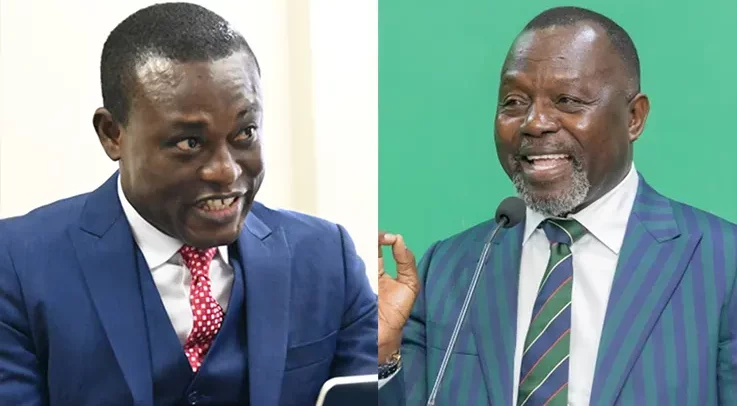
Legal practitioner and public commentator, Austin Kwabena Brako-Powers, has urged the Attorney-General not to take over cases currently being handled by the Office of the Special Prosecutor (OSP) following a recent High Court ruling on prosecutorial authorisation.
According to him, it is premature for the Attorney-General to assume control of the cases solely based on the court’s decision, which suggested that the Special Prosecutor lacked the requisite authorisation to prosecute.
Mr Brako-Powers maintained on TV3’s Big Issues on Friday, April 17, 2026, that even if the argument about lack of authorisation were to be accepted—an პოზition he firmly rejects—the appropriate step would be for the Attorney-General to grant the necessary authorisation rather than take over the cases.
He questioned the basis of the court’s conclusion, insisting that the Special Prosecutor already possesses valid authorisation under the law establishing the office.
Citing the Memorandum accompanying the Office of the Special Prosecutor Bill, 2017, he argued that it clearly reflects the Attorney-General’s intent to vest prosecutorial authority in the Special Prosecutor.
He further explained that the OSP law is distinct from other statutory bodies such as the Economic and Organised Crime Office (EOCO), and must be interpreted within its own unique legislative context.
On the nature of authorisation, Mr Brako-Powers referenced Section 56 of the Criminal and Other Offences (Procedure) Act, 1960 (Act 30), which provides that the Attorney-General may authorise prosecutions through an Executive Instrument.
He, however, emphasised that the word “may” in legal drafting is permissive rather than mandatory. Relying on Section 42 of the Interpretation Act, he noted that it grants discretionary power to the Attorney-General in determining how such authorisation is given.
This, he explained, means that authorisation can be conferred through various means, including directly through statute, as in the case of the Office of the Special Prosecutor Act.
“I am clear in my mind that the Special Prosecutor has due authorisation from the Attorney-General,” he stressed, reiterating his disagreement with the court’s position.
Despite his criticism of the ruling, Mr Brako-Powers acknowledged that courtroom outcomes often depend on the strength of evidence and legal arguments presented.
He criticised the legal representation of the OSP, describing it as inadequate and lacking attention to detail, particularly for failing to present crucial documents such as the memorandum accompanying the OSP Bill.
According to him, the absence of these materials may have influenced the court’s decision, although he conceded that the judge acted within his authority based on the case presented before him.

