

For many motorcycle and tricycle riders in Ghana, the road is more than a means of getting from one place to another. It is their workplace, their source of income and, for many families, the means through which food is put on the table.
But every journey also carries a responsibility — to the rider, the passenger and every other road user.
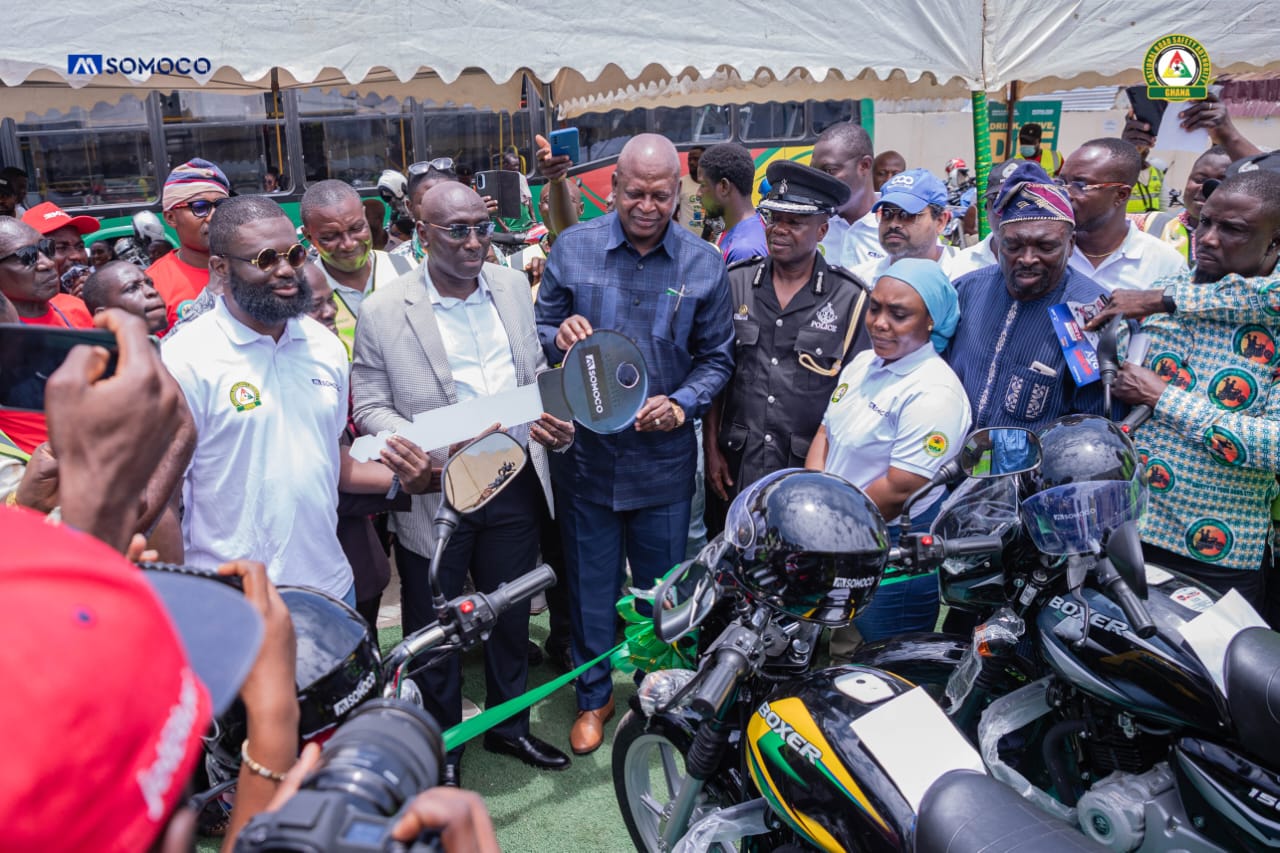
It is against this backdrop that Somoco Ghana Limited, the sole authorised distributor of Bajaj Automobiles in Ghana, has launched its “Safe Journey” 2026 Road Safety Campaign, in partnership with the National Road Safety Authority (NRSA), Driver and Vehicle Licensing Authority (DVLA), Ministry of Transport and Ghana Police Service.
Running through December 2026, the campaign seeks to make road safety a practical part of everyday mobility, with particular attention to motorcycle and tricycle users.
Rather than treating road safety as simply a matter of enforcement after accidents occur, Somoco says it wants to move the conversation towards prevention, education, responsible riding and preparation before a rider gets onto the road.
At the heart of the initiative is the Somoco Riding Academy, a DVLA-certified programme designed to provide rider education, training and licensing support, particularly for commercial riders.
For Somoco Managing Director Nii Ayi Hyde, the responsibility of a mobility company does not end when a customer leaves the showroom with a motorcycle or tricycle.
“Road safety must be integrated into the entire customer journey, from the showroom to the road.”
That philosophy is significant in a country where motorcycles and tricycles have become increasingly important to transportation, commerce and livelihoods.
A motorcycle can represent a young person’s first business opportunity.
A tricycle can be the difference between unemployment and an income. For a passenger, it can be the quickest and most affordable way to get home.
But the same roads that create these opportunities can also expose riders and passengers to serious risks when safety is neglected.
That is why the campaign is placing emphasis on training, licensing, helmets, protective equipment and responsible road-user behaviour.
Somoco’s Head of Marketing, Jerry Aye, said the company’s ambition goes beyond a campaign that disappears when the publicity ends.
The objective, he explained, is to make safer choices easier for riders and encourage habits that remain long after the campaign concludes.
A national responsibility
The National Road Safety Authority welcomed the initiative, with Director-General Abraham Amabila commending Somoco for taking the lead in road safety education.
His message was clear: road safety cannot be left to government agencies alone.
Every rider, driver, passenger, vehicle manufacturer, dealer, transport operator and corporate organisation has a role to play.
The Minister of Transport, Joseph Bukari Nikpe, also used the occasion to speak about developments surrounding the legalisation and regulation of commercial motorcycle operations, popularly known as Okada.
The emerging regulatory environment makes rider education, licensing and responsible operation even more important.
If commercial motorcycle operations are to form part of Ghana’s transportation ecosystem, the country must ensure that the people operating these services have the necessary skills, knowledge and understanding of road safety.
Safety must become a habit
Perhaps the most important message from the Safe Journey campaign is that road safety cannot depend solely on police checkpoints, fines or public campaigns after tragedy has occurred.
It has to become a habit.
It means a rider thinking twice before speeding.
It means wearing a proper helmet even when travelling a short distance.
It means understanding traffic signs and road markings.
It means refusing to carry out dangerous manoeuvres simply because there is pressure to deliver a passenger or package quickly.
It means passengers also recognising that their safety matters and choosing responsible operators.
And it means companies that sell mobility products accepting that they have a role in ensuring that their customers understand how to use those products safely.
Putting resources behind the message
Somoco has also demonstrated its commitment by donating a brand-new Bajaj Boxer 125 HD motorcycle to the National Road Safety Authority to support its road safety activities.
The campaign will continue across Ghana until December, with activities including rider education, safety awareness, donations, training and licensing support for commercial riders, and the promotion of responsible road-user behaviour.
The launch brought together representatives of the NRSA, DVLA, Ministry of Transport, Ghana Police Service, transport operators, riders, ride-hailing partners and the media.
But beyond the speeches, partnerships and branded campaign materials lies a much bigger question:
What happens when the campaign ends and the rider gets back on the road?
That is ultimately where the success of Safe Journey will be measured.
Not by the number of launches held or publicity generated, but by whether more riders return home safely to their families at the end of the day.
Because behind every motorcycle is a person.
Behind every rider is a family.
And behind every journey is someone waiting for that journey to end safely.
That is why road safety should never be viewed merely as a regulation or corporate responsibility.
It is a human responsibility.
And Somoco’s Safe Journey campaign is putting that responsibility firmly back on the road.
If you want, I can also turn this into a stronger Ghanaian newspaper/op-ed style advocacy piece with a more powerful headline, opening anecdote and sharper calls to action for NRSA, DVLA, government, motorcycle dealers and riders.

