

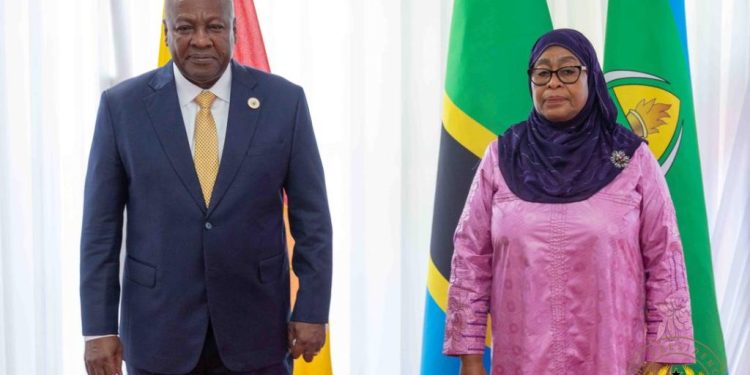
President John Dramani Mahama has voiced apprehension over the rising tensions involving the United States, Israel and Iran, cautioning that the worsening Middle East conflict could generate adverse economic repercussions for African nations.
Speaking during a bilateral meeting with Tanzanian President Samia Suluhu Hassan at the State House in Arusha on March 2, 2026, President Mahama characterised the Middle East as the core hub of global oil production and warned that African economies should position themselves for possible external shocks.
He referenced the growing exchanges between the U.S., Israel and Iran, alongside reported retaliatory actions across sections of the Gulf, stressing that the developments risk unsettling international energy markets.
In his view, a sustained rise in crude oil prices resulting from the standoff would have immediate implications for African countries, many of which depend significantly on imported refined petroleum products to power their economies.
The latest flare-up comes after months of strained relations between Israel and Iran, largely revolving around concerns about Iran’s nuclear ambitions and its purported support for militant groups within the region. The United States, a longstanding partner of Israel, has endorsed Israeli security measures and strengthened its military footprint in the Gulf, citing threats to maritime trade routes and broader regional stability.
Iran, for its part, has accused both Israel and the United States of hostile conduct and has responded with missile and drone strikes aimed at key strategic targets.
The deepening crisis has fuelled concerns about a wider regional confrontation, particularly around the Strait of Hormuz, a vital maritime corridor that facilitates a considerable share of the world’s oil exports.
International crude prices have already trended upward amid the uncertainty, with market watchers cautioning that any extended disruption could intensify inflationary pressures and compound fiscal challenges for energy-importing economies across Africa.

