

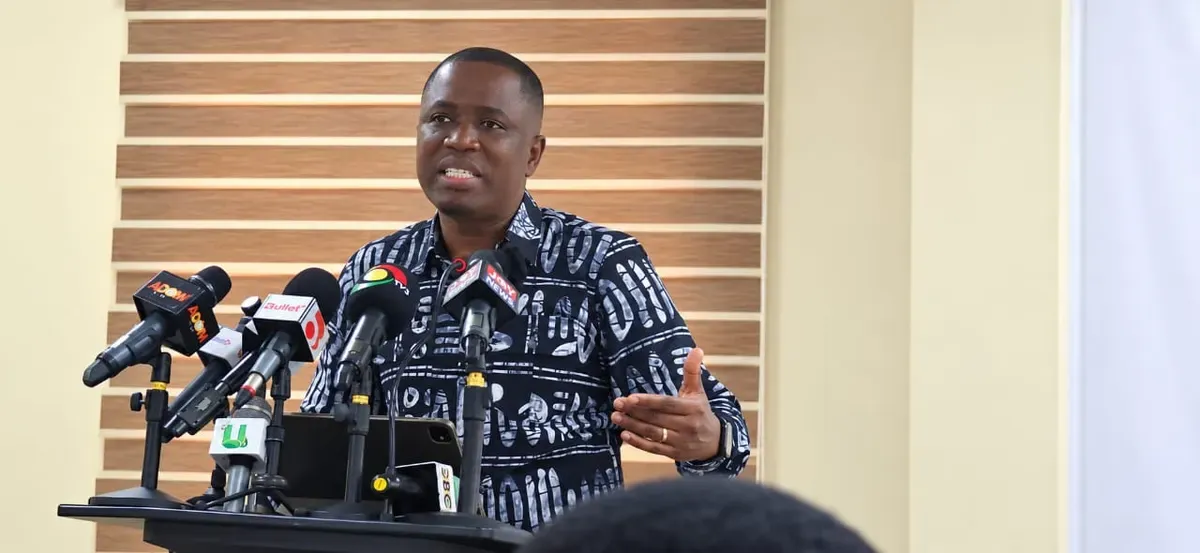
A Development Economist, Dr Frank Bannor, has told the Finance Minister that available data from the Ghana Statistical Service supports claims that traders are struggling to sell their goods.
Dr Bannor, also a lecturer at the Ghana Institute of Management and Public Administration (GIMPA), explains that data from the Ghana Statistical Service show that rent accounted for 13.5 per cent of total inflation contributions.
Bus and trotro fares followed at 12 per cent, while fresh tomatoes accounted for 11.7 per cent, he said.
Together, Dr Bannor said, the three items represented 37.2 per cent of total contributions to inflation in October 2026.
He said it is common knowledge that average income earners in Ghana spend most of their income on the above-mentioned categories.
“In essence, their purchasing power has been eroded by “real inflation”! It is therefore not surprising that traders are complaining about low sales. As my senior colleague Dr. Boako rightly points out, the reality is quite different from what has been recorded on paper!” he said in a statement.
The Minister of Finance, Dr Cassiel Ato Forson, had dismissed claims that traders are struggling to sell their goods due to weak consumer demand, describing such assertions as propaganda not supported by economic data.
He insisted that available economic indicators show growth in the trade sector, arguing that the country’s economy is performing well despite concerns over trading conditions.
Dr Ato Forson was responding to concerns about reports that traders and business owners were finding it difficult to sell their goods during an interactive engagement with students and the university community at the Kwame Nkrumah University of Science and Technology (KNUST).
He maintained that claims of declining sales were not supported by empirical evidence, adding that market women could attest to improvements in the affordability of goods and services.
According to him, falling prices are gradually improving consumers’ purchasing power, allowing more people to afford food and other essential commodities.
“If you look carefully at the growth numbers, the GDP growth numbers, and analyze it carefully. You see that trade is growing. Trade is growing and what is being said is not supported by empirical evidence. There’s no evidence to it.
“Economy is doing well. When you go and speak to market women, they will tell you that prices of goods and services are coming down and people can now buy food at the minimum unlike yesterday” he said.
According to him, his responsibility as Finance Minister is to ensure that public funds are channelled into productive sectors rather than resorting to excessive borrowing to finance government expenditure.
He cautioned against returning to what he described as the unsustainable borrowing practices of the past, which he said could undermine the country’s economic stability.
Dr Ato Forson further challenged those questioning the performance of the economy to examine the country’s Gross Domestic Product (GDP) growth figures, insisting that the data point to growth in the trade sector.

